
Sciatica Treatment in Dallas: When to See a Chiropractor
Sciatica treatment in Dallas should begin with determining why pain, numbness, tingling, or weakness is traveling from your lower back or buttock into your leg. Although many people use the word “sciatica” to describe any pain in the back of the leg, sciatica is not a single medical condition. It is a group of symptoms caused by irritation or compression affecting the sciatic nerve or its contributing nerve roots.
For some people, the discomfort begins as an occasional ache. For others, it feels like burning, an electric shock, or a sharp pain that makes sitting, standing, driving, sleeping, or walking difficult.
At White Rock Chiropractic, Dr. Larry Parent evaluates each patient individually to help identify the possible source of the symptoms before recommending care. If pain is traveling down your leg, an evaluation can help determine whether chiropractic care is appropriate or whether you should be referred for additional medical testing.
What Is Sciatica?
The sciatic nerve is the largest nerve in the body. It begins in the lower spine and travels through the buttocks and down the back of each leg.
According to the National Library of Medicine’s MedlinePlus, sciatica can cause pain, weakness, numbness, or tingling that begins in the lower back and extends into the calf, foot, or toes. Symptoms commonly affect only one side of the body.
Sciatica is a symptom of an underlying problem rather than a diagnosis by itself. That distinction is important because different conditions can produce very similar symptoms. Effective care depends on understanding what may be irritating the nerve—not merely focusing on where the pain is felt.

Illustration of sciatica pain and affected areas
What Does Sciatic Nerve Pain Feel Like?
Sciatica does not feel exactly the same for everyone. Common symptoms include:
- Lower-back pain that travels into the buttock
- Pain running down the back or side of one leg
- Burning or tingling sensations
- Numbness in the leg, calf, foot, or toes
- Sharp or electric-shock-like pain
- Leg or foot weakness
- Pain that becomes worse after sitting
- Difficulty standing up after sitting
- Discomfort triggered by coughing, sneezing, bending, or lifting
- Trouble finding a comfortable sleeping position
Some people experience intense leg pain with very little lower-back pain. Others notice symptoms only in the buttock, calf, or foot and may not realize that the irritation could originate in the lower spine.
Because other health problems can sometimes imitate sciatica, symptoms should not be self-diagnosed based only on where they hurt.
What Causes Sciatica?
Several conditions can irritate or place pressure on the nerve roots associated with the sciatic nerve.
Herniated or Bulging Disc
The discs between the spinal bones act as cushions. If a disc bulges or herniates, it may irritate a nearby nerve root.
Healthline explains that a herniated disc in the lower back may cause pain in the buttock, thigh, calf, or foot, along with numbness, tingling, or weakness.
Spinal Stenosis
Spinal stenosis is a narrowing of the space through which the spinal nerves travel. This narrowing may place pressure on nerves and contribute to leg pain, numbness, or weakness, particularly while standing or walking.
Degenerative Changes
The joints and discs of the spine can change over time. These changes do not always cause pain, but in some people, they may reduce the space around a nerve or affect normal spinal movement.
Spondylolisthesis
Spondylolisthesis occurs when one vertebra shifts forward in relation to the vertebra below it. Depending on its location and severity, the shift may contribute to nerve irritation.
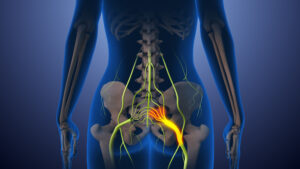
Image illustrates sciatica nerve pain, extending from the lower back through the hips to the leg.
Muscle and Movement Problems
Tight muscles, restricted joints, poor posture, reduced mobility, or improper movement patterns can place additional stress on the lower back and surrounding tissues. Piriformis syndrome, for example, can cause buttock and leg symptoms that may resemble sciatica.
Injuries
Falls, sports injuries, work injuries, and automobile accidents can damage discs, joints, muscles, or ligaments and may contribute to radiating pain. If symptoms began following a collision, read How Long After a Car Accident Should You See a Chiropractor?.

Walking with painful hip joint
Is Every Pain Down the Leg Sciatica?
No. Pain traveling down the leg may come from several different sources. Hip problems, muscle injuries, peripheral nerve conditions, circulation problems, and other medical conditions can sometimes produce symptoms that resemble sciatica.
This is one reason an examination is important. Where the pain travels, which movements make it worse, whether weakness is present, and how your reflexes respond can provide valuable information about the possible source.
If your discomfort is limited primarily to the lower back, our article Why Does My Lower Back Hurt? 10 Common Causes and When to See a Dallas Chiropractor explains several other common possibilities.
When Should You Seek Sciatica Treatment in Dallas?
Consider scheduling an evaluation if:
- Pain travels from your back or buttock into your leg
- Symptoms have lasted longer than several days
- Pain keeps returning
- Sitting or driving makes the pain worse
- You have numbness or tingling in your leg or foot
- Your symptoms interfere with sleep
- Pain limits your ability to work, walk, or exercise
- You have difficulty completing normal daily activities
- Home remedies provide only temporary relief
- Symptoms began after a fall, sports injury, work injury, or car accident
You do not necessarily have to wait until the pain becomes unbearable. An earlier evaluation may help identify the problem before it further limits your movement or daily activities.
When Is Sciatica an Emergency?
Most sciatica symptoms do not require emergency treatment. However, certain symptoms can indicate a serious medical problem.
Seek immediate emergency medical care if back or leg pain is accompanied by:
- Loss of bladder or bowel control
- New difficulty beginning or controlling urination
- Numbness around the groin, inner thighs, or saddle area
- Sudden or significant weakness in one or both legs
- Symptoms affecting both legs
- Fever or signs of infection
- Severe pain following a major accident or fall
- A history of cancer accompanied by new, unexplained back pain
Loss of bladder or bowel control may be a sign of cauda equina syndrome, a rare but serious condition requiring immediate medical attention. Do not schedule a routine chiropractic visit for these symptoms—go to an emergency department.
How Is the Cause of Sciatica Evaluated?
Before recommending sciatica treatment in Dallas, Dr. Parent will consider your health history, how the symptoms began, where the pain travels, and which movements make it better or worse.
An examination may include an evaluation of:
- Posture and spinal movement
- Range of motion
- Muscle strength
- Reflexes
- Areas of numbness or altered sensation
- Movements that reproduce the symptoms
- Previous injuries or accidents
- Your ability to sit, stand, bend, or walk comfortably
White Rock Chiropractic also has on-site digital X-rays when clinically appropriate. X-rays do not show every soft-tissue or disc problem, so patients may be referred for an MRI, specialist evaluation, or other testing when necessary.
The goal is to determine whether your symptoms are appropriate for conservative chiropractic care and to identify circumstances that require another healthcare provider.
Can a Chiropractor Help With Sciatica?
Chiropractic care may help some patients whose sciatic symptoms are related to mechanical problems involving the lower back, restricted joint movement, or surrounding muscle tension. However, the recommended approach depends on the cause and severity of the symptoms.
When chiropractic care is appropriate, the goals may include:
- Improving spinal and joint mobility
- Reducing stress on irritated tissues
- Decreasing muscle tension or spasms
- Improving flexibility and movement
- Rebuilding strength and stability
- Helping the patient return to normal activities safely
Chiropractic care should not be presented as a one-size-fits-all solution. Some patients may need co-management, advanced imaging, medical treatment, or referral to another specialist.
What May Be Included in Your Care Plan?
White Rock Chiropractic offers several forms of conservative care. Depending on your examination findings, your personalized plan may include:
- Chiropractic adjustments
- Cold laser therapy
- Electrical muscle stimulation
- Ultrasound therapy
- Hot or cold therapy
- Guided stretching
- Therapeutic exercise
- Strength and rehabilitation training
- Home-care and movement recommendations
You can learn more about our available chiropractic therapy services and equipment.
Our office includes an exercise and rehabilitation area with equipment to help appropriate patients safely rebuild strength, mobility, endurance, and coordination. The specific services recommended will depend on your condition, comfort level, and treatment goals.
Should You Rest When You Have Sciatica?
A short period of reduced activity may be appropriate when pain is severe, but remaining in bed for extended periods is generally not recommended.
MedlinePlus advises that prolonged bed rest is not recommended for sciatica and that people typically return to normal activity gradually. Review its sciatica self-care information for additional general guidance.
Until you have been evaluated:
- Avoid lifting or movements that sharply increase the pain
- Change positions frequently instead of sitting for long periods
- Use proper support while driving or working
- Avoid aggressive stretches that send pain farther down the leg
- Take short, comfortable walks if they do not worsen symptoms
- Do not force exercise through numbness or increasing weakness
The right exercise for one cause of leg pain may aggravate another. Personalized guidance is safer than following random online exercises without knowing what is causing your symptoms.

Sciatica Pain concept with woman suffering from buttock pain spreading to down leg
Why Choose White Rock Chiropractic?
Dr. Larry W. Parent has served the Dallas community for more than 30 years. White Rock Chiropractic provides individualized care rather than assuming that every person with leg pain needs the same treatment.
Our office offers:
- Personalized examinations and care plans
- On-site digital X-rays when appropriate
- Chiropractic adjustments
- Multiple therapeutic modalities
- A dedicated exercise and rehabilitation area
- Convenient Monday-through-Friday hours
- Early-morning and evening appointments Monday through Thursday
- Personal responses from Dr. Parent when patients have questions
We serve patients from Dallas, Lake Highlands, Richardson, Garland, Mesquite, and surrounding communities.
Frequently Asked Questions About Sciatica Treatment in Dallas
How long does sciatica last?
The duration varies according to the cause, severity, general health, activity level, and whether nerve compression is present. Some cases improve over several weeks, while others persist or repeatedly return. An examination can help determine what may be contributing to your symptoms.
Can sciatica affect both legs?
Sciatica more commonly affects one side, but symptoms can occur in both legs. Bilateral symptoms—especially when accompanied by bladder or bowel changes, saddle numbness, or increasing weakness—require urgent medical evaluation.
Do I need an X-ray for sciatica?
Not everyone needs an X-ray. The decision depends on your history, examination findings, age, symptoms, and whether trauma or another underlying condition is suspected. An MRI may be more appropriate when detailed views of discs, nerves, and other soft tissues are needed.
Is walking good for sciatica?
Gentle walking may be helpful for some people, provided it does not increase pain, numbness, or weakness. Begin with short distances and stop if your symptoms worsen or travel farther down the leg.
Can sitting make sciatica worse?
Yes. Prolonged sitting can aggravate symptoms for some people. Changing positions, taking brief walking breaks, and improving the support and setup of your chair may help reduce irritation.
When should I see a chiropractor for sciatica?
Consider an evaluation when symptoms persist, return repeatedly, interfere with sleep or activity, or include pain, tingling, or numbness extending into the leg. Sudden weakness or emergency warning signs require immediate medical care instead of a routine chiropractic appointment.
Schedule an Evaluation at White Rock Chiropractic
If back, buttock, or leg pain is keeping you from working, sleeping, exercising, driving, or enjoying time with your family, you do not have to keep guessing about the cause.
White Rock Chiropractic provides individualized evaluations for patients seeking sciatica treatment in Dallas. Dr. Parent will evaluate your symptoms, explain his findings, determine whether chiropractic care is appropriate, and make a referral when your condition requires another type of care.
Call (214) 328-2225 or schedule an appointment online today.
White Rock Chiropractic
10677 E. Northwest Highway, Suite 100
Dallas, Texas 75238
This article is intended for general educational purposes and is not a substitute for an individual examination, diagnosis, or emergency medical care.